Product Name

Hot Topics from Olympus

45MG
This new handheld ultrasonic thickness gage is compatible with the full range of Olympus dual and single element transducers making it an all-in-one solution.
InHelp
InHelp, the inspection data management and reporting software streamlines many aspects of remote visual inspections with the IPLEX.
DSX Series
The DSX series of opto-digital microscopes provide operating simplicity and absolute reliability.
OmniScan MX2
The new PA module, a new UT module with TOFD, as well as new software programs (NDT SetupBuilder and new OmniPC version) expand the capabilities of the OmniScan MX2 platform.
IPLEX TX
The IPLEX TX, 2.4 mm diameter articulating videoscope for very narrow spaces, enables you to make inspections inside parts where access is limited due to very narrow openings.
i-SPEED PL
A new super slow-motion camera from Olympus featuring a PL lense mount for use in the near-Broadcast market. Ideal for commercials, music videos and documentaries.
DELTA Professional Handheld XRF
New X-Act Count Technology combined with 40kV tube and SDD provides the best value solution for Olympus Handheld XRF - superior performance in speed, LODs, and elemental range.
LabVIEW compatibility
i-SPEED cameras* are now compatible with LabVIEW - expanding their functionality for users wanting to control cameras from the LabVIEW environment.
Magna Mike 8600
The Magna-Mike is a Hall Effect thickness gage that uses a magnetic probe to perform accurate measurements on nonferrous and thin materials such as plastic bottles.
LEXT OLS4000
The ideal non-contact measuring instrument for nanometer level imaging, 3D and roughness measurements.
Olympus GoldXpert
Portable countertop XRF analyzer provides nondestructive testing for rapid Precious Metals ID and analysis with automatic Karat Classification and Gold Plating Alert Feature.
NextPrev

News Bulletin

Stay up-to-date on special offers, new products or applications

Subscribe Now

Find us on:

Featured Video

i-SPEED Labs 1 - Getting Started - i-SPEED Fundamentals

View All Videos

Olympus provides an industry-leading portfolio of innovative test, measurement, and imaging instruments.

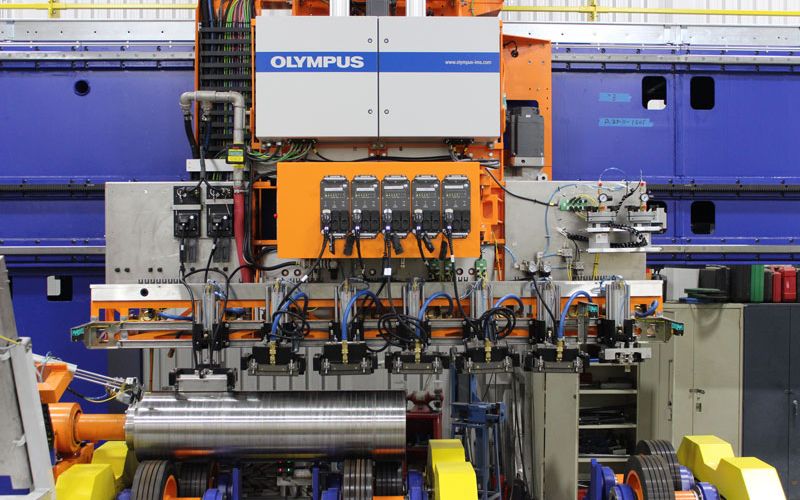
Leading edge testing technologies include remote visual inspection, microscopy, ultrasound, phased array, eddy current, eddy current array, X-ray fluorescence and diffraction, high speed video, and optical metrology. Our products include ultrasonic flaw detectors and thickness gages, videoscopes, borescopes, microscopes, high speed video cameras, in-line and advanced nondestructive testing systems, XRF and XRD analyzers, interferometers, and a large selection of industrial scanners, probes, software programs, and instrument accessories.

Olympus instruments are used in industrial and research applications ranging from aerospace, power generation, petrochemical, manufacturing, and automotive to consumer products. Olympus instruments contribute to the quality of products and add to the safety of infrastructure and facilities.

Download our Olympus-IMS Industrial Solutions brochure >>

Download our Olympus Power Generation Solutions >>

Ultrasonic Testing

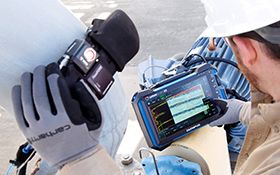
Ultrasonic testing uses high frequency, highly directional sound waves to measure material thickness, find hidden internal flaws, or analyze material properties in metals, plastics, composites, ceramics, rubber, and glass. Using frequencies beyond the limit of human hearing, ultrasonic instruments generate shorts bursts of sound energy that are coupled into the test piece, and the instrument monitors and analyzes reflected or transmitted wave patterns to generate test results.

Phased Array Testing

Phased Array testing is a specialized type of ultrasonic testing that uses sophisticated multi-element array transducers and powerful software to steer high frequency sound beams through the test piece and map returning echoes, producing detailed images of internal structures similar to medical ultrasound images. It is used for inspection of critical structural metals, pipeline welds, aerospace components, and similar applications where the additional information supplied by phased array inspection is valuable.

Eddy Current and Eddy Current Array Testing

Eddy Current testing utilizes principles of electromagnetic induction to locate near-surface cracks, measure thickness, and categorize certain material properties in metals. An eddy current probe generates a magnetic field that induces currents that flow in a circular path in the test material. Changes in the integrity or thickness of the test piece will in turn affect current flow, the magnetic field, and ultimately the magnitude and phase of the voltage in the coil. The instrument monitors the probe output and displays information for analysis. Eddy current array systems use multiple probes to expand coverage areas and provide imaging capability.

Optical Metrology

Measuring microscopes provide non-contact geometric measurements of electronic devices and machined parts with a high-precision measuring table. 3D measuring laser microscopes are capable of making measurements with sub-micron accuracy. High-definition 3D images acquired using confocal technology enable highly accurate height measurements, while a minute laser spot enables non-contact surface roughness measurements regardless of material surface condition. Furthermore, by applying our lens evaluation technology developed with our lens manufacturing experience, we also provide laser interferometers for measuring surface accuracy of optical components, and a spectral reflectivity measurement device for measuring spectral reflectivity and film thickness. *Interferometers may not be available in some areas.

Microscope Solutions

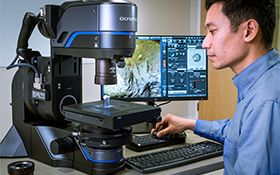
Optical microscopes are microscopes that typically use visible light and a system of lenses to magnify images of small samples. Industrial microscopes incorporate many complex designs that aim to improve resolution and sample contrast. Images from an optical microscope can be captured by normal light-sensitive cameras to generate a micrograph. Modern developments in CMOS and charge-coupled device (CCD) cameras allow the capture of digital images. Digital microscopes are available with a CCD camera to examine a sample, and the image is shown directly on a computer screen without the need for eye-pieces.

Remote Visual Testing

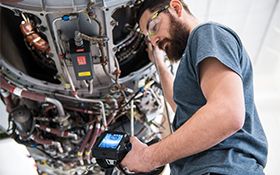
Our remote visual inspection videoscopes systems are designed to meet the demands of the modern industrial inspection environment. They offer portable and intelligent remote imaging solutions with a host of advanced, yet intuitive features, making them ideal remote visual inspection instruments A wider range of videoscope, fiberscopes and borescopes with various diameters and viewing options are available, making our videoscopes systems most versatile inspection system suitable for a multitude of inspection requirements.

High Speed Video

High speed video is capable of capturing images at speeds up to 1,000,000 frames per second. Our cameras are an effective method of locating problems quickly and easily. Users can evaluate new designs, increase productivity, and reduce maintenance costs. Video images are digitally captured onto its memory with custom designed software that provides the operator with the ability to analyze and enhance images. Velocity and distance measurement can also be calculated.

XRF and XRD Analysis

X-ray Fluorescence (XRF) and X-ray Diffraction (XRD) Analysis are based on the interaction of matter with x-rays which are short-wavelength, high-energy beams of electromagnetic radiation. XRF analysis utilizes the fact that when a primary x-ray beam strikes a substance, it excites elements at the atomic level, causing electron movement. Each element has characteristic emissions of secondary (fluorescent) x-rays when these movements occur, identifying the elemental composition of the substance. For instance, XRF can tell that iron and sulfur are in a substance and the quantity of each. XRD analysis utilizes the fact that when a primary x-ray beam strikes a substance, diffraction takes place creating a pattern that is unique to the crystalline structure(s) of the substance. XRD patterns are used to identify the compound(s) in the substance. For instance, XRD can identify and quantify the iron-sulfur compound in a substance such as marcasite - iron disulfide orthohomic, pyrite - iron disulfide cubic, or pyrrhotite - iron sulfide. Together, XRF and XRD give a comprehensive picture of the composition of a substance by providing elemental and compound identification and quantification. These non-destructive, rapid analysis techniques are widely used to determine the composition of metals, alloys, glass, ceramics, minerals and countless other materials.

Inspection & Measurement Systems
English | 日本語 | français | 简体中文 | Deutsch | italiano | čeština | magyar | Tiểng Việt | Español | русский | polski | português | 한국어

Advanced NDT Solutions

Flaw Detectors

Integrated Inspection Systems