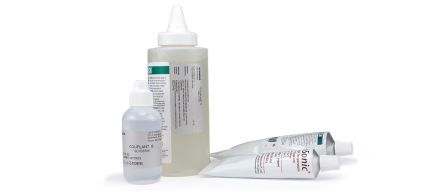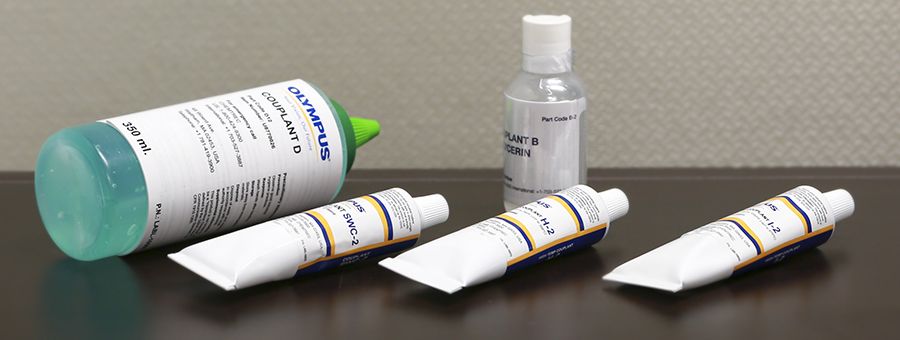
초음파 접촉 매질은 실제로 모든 접촉 테스트 응용 분야에서 사용되어 변환기와 테스트 부분 간에 음향 에너지 전송을 용이하게 합니다. 일반적으로 접촉 매질은 어느 정도적당히 점성이거나 비독성 액체, 겔 또는 풀 형태입니다. 일반적으로 비파괴시험에 사용된 초음파 주파수에서 음향 에너지는 공기를 통해 효과적으로 전송되지 않으므로 이 접촉 매질을 반드시 사용해야 합니다. 감쇠 효과 외에도, 공기는 변환기 보호막과 일반적인 테스트 물질 모두에 대하여 심각한 음향 임피던스 불일치를 나타냅니다. 변환기와 테스트 부분 간의 매우 얇은 공극도 효과적인 음향 에너지 전송을 방지하고 종래의 테스트를 불가능하게 합니다. 물, 모터유, 그리스 및 심지어 헤어젤과 같은 일부 상업용 제품과 같은 다양한 일반적인 물질이 많은 응용 분야에서 초음파 접촉 매질로 사용될 수 있습니다. 그러나, 고온 및 정상 입사 전단파 시험에서 최상의 결과를 얻기 위해서는 특별 제작된 접촉 매질을 사용해야 합니다. Olympus 초음파 접촉 매질 라인에는 여러 응용 분야에 최적화된 다섯 가지 제품이 있습니다. 부품 코드에 따라 나열된 각 제품에 대한 설명이 뒤따릅니다. 접촉 매질 B2 – 글리세린글리세린은 범용 접촉 매질이기도 합니다. 글리세린을 사용하면의 이점은 이것은 점성이고 음향 임피던스가 매우 높다는 이점이 있어서아서, 접촉 매질로서 거친 표면 및 감쇠력이 높은 물질에 선호됩되는 접촉 매질입니다. 글리세린의 음향 임피던스는 2.42kg/m2s x 106입니다(이에 비해 프로필렌 글리콜의 경우 1.61, 모터유의 경우 대략 1.5, 물의 경우 1.48임). 글리세린의 음향 임피던스는 거의 플라스틱의 음향 임피던스와 일치하며, 다른 일반적인 결합액보다 금속의 수치에 더 근접하므로, 변환기와 테스트 부분 간에 더 효과적으로인 음성이 전송되게 합을 제공합니다. 금속 테스트에서, 일반적으로 글리세린은 프로필렌 글리콜과 비교할 때 신호 세기에서 3~6dB 증가를 제공합니다. 글리세린 사용의 단점은 테스트 표면에서 이를것을 제거하지 않으면, 이것이 대기 중 물을 흡수하고 보유하여 일부 금속에서 녹 생성 또는 부식을 촉진시킬 수 있다는 것입니다. 또한 이것을 제거하지 않으면 곰팡이가 자라게파이 성장을 지원 할 수도 있습니다. 간혹 글리세린은 이것의 좋은 음향 속성 때문에 주물 테스트에 권장되는 경우가 있지만, 사용 후 꼼꼼히주의깊게 세척해야 합니다. 이 부식 효과는 플라스틱, 섬유유리 또는 복합재에서는 발생하지 않으므로, 이러한 재질에서는 글리세린을 자유롭게 사용할 수 있습니다. 글리세린에 최대 권장 온도는 대략 200°F(90°C(200°F))입니다. 접촉 매질 D12 – 겔겔 유형 접촉 매질은 샌드캐스트 금속 및 섬유유리 레이업과 같은 거친 표면에 권장되는 경우가 있는데, 이러한 유형의 거친 점성 및 상대적으로 높은 음향 임피던스는 변환기로 인해가 테스트 표면과 부드럽게 접촉할 수 없게 하는 상황에서 음 결합을 최극대화합니다. 또한 겔 접촉 매질은 일반적으로 넓은 표면 면적에서 변환기를 밀어야 하는 용접 점검에서 사용됩니다. 여기서, 이점은 단순히 큰 면적에서 겔은 빠르게 펴질 수 있고 용접을 따라 변환기를 스캔할 때 적절한 결합을 유지한다는 것입니다. 또한 겔은 떨어지거나 흐르지 않기 때문에 오버헤드 표면이나 수직 벽을 검사하는 데 유용합니다. 최대 200°F(90°C(200°F)의 뜨거운 표면에서 대부분의 겔 접촉 매질을 사용할 수 있습니다. 접촉 매질 H-2 – 고온 접촉 매질접촉 매질 H-2는 고온에서 사용될 수 있는 겔입니다. 이 제품의 제조업체는 이것이 특정한 열린 환경 조건에서 최대 750°F(398°C(750°F)의 온도에서 사용될 수 있음을 명시합니다. 고온 접촉 매질에서처럼, 지정된 응용 분야에서 이것이 적합한지 여부는 사용자가 판단해야 합니다. 접촉 매질 I-2 – 고온 접촉 매질접촉 매질 I-2는 고온에서 사용될 수 있는 겔입니다. 제조업체에 따르면 −40~1250°F(−40~675°C(−40~1250°F) 범위에서 사용할 수 있습니다. 전단파 접촉 매질 – SWC-2오일 또는 글리세린과 같은 액체는 전단파를 지지하지 않으므로, 일반적인 입사 전단파 변환기에는 매우 높은 점성의 접촉 매질이 필요합니다. 일반적으로, 일반적인 입사 전단파 결합에는 끈적이는 수지가 사용되었습니다. Olympus의 SWC-2는 바르고 제거하기 쉬운 매우 높은 점성의 비독성 수용성 유기질입니다. 일반적으로 변환기나 테스트 부분의 면에는 매우 소량을 놓고 매우 얇은 층을 눌러야 합니다. 최적의 결합을 위해서는 테스트 파장의 작은 부분인 접촉 매질층이 얇은 것이 중요합니다. 테스트 후, 잔류물은 온수로 씻어낼 수 있습니다. SWC-2는 대략 최대 100°F(38°C(100°F))의 온도에서 사용될 수 있습니다. 모든 Olympus 접촉 매질에 대한 SDS 데이터시트는 SDS 데이터시트에서 확인하실 수 있습니다. 또한 실리콘유 및 프로필렌 글리콜도 이전에 Olympus에서 제공해서 일반적으로 사용되는 접촉 매질입니다. 일반 버전은 화학 공급업체에서 쉽게 구할 수 있습니다. |