Inspection & Measurement Systems

应用

Application Notes

Detection of Hydrogen-Induced Cracking (HIC)

General Description of the Application

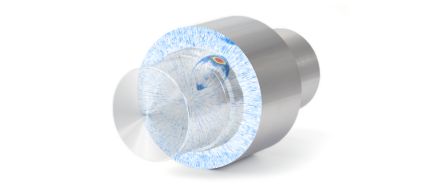
Hydrogen-induced cracking (HIC) can occur in susceptible steels exposed to aqueous environments containing hydrogen sulphides. It is a form of hydrogen-related cracking and can have two distinct morphologies:

1. The first type is commonly referred to as hydrogen-induced cracking (HIC) and can occur where little or no applied or residual tensile stress exists. It is manifested as blisters or blister cracks oriented parallel to the plate surface.

2. The second type produces an array of blister cracks linked together in the through thickness direction by transgranular cleavage cracks. The latter type of cracking is referred to as stress-oriented hydrogen-induced cracking (SOHIC). SOHIC can have a greater effect on serviceability than HIC because it effectively reduces load carrying capabilities to a greater degree.

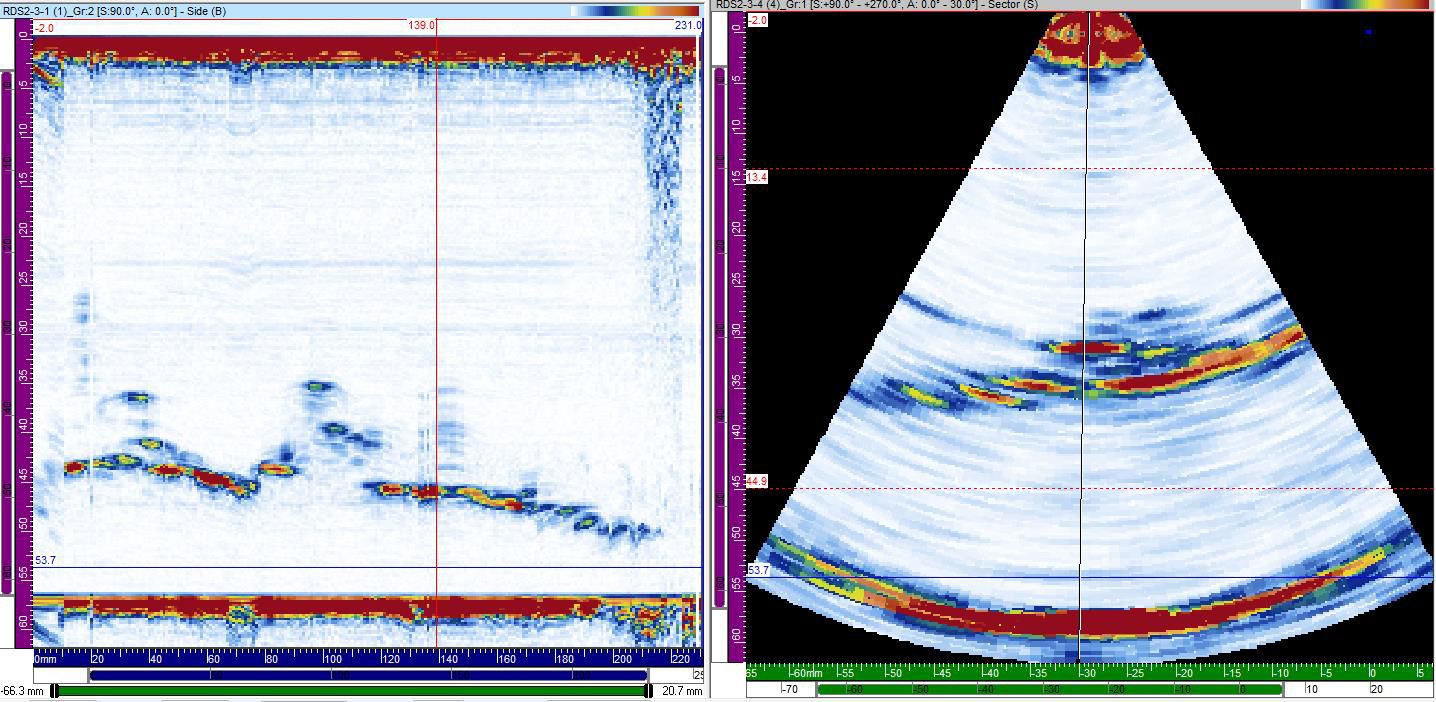
The inspection requires characterization of the defect areas to differentiate between spot inclusions, laminations, and different stages of hydrogen-induced cracking (HIC).

The benefit of electronic angle sweeping (S-scans) provided by the OmniScan™ allows simultaneous scanning from −30 to +30 degrees. The imaging from this scanning technique allows the user to distinguish between spot indications and interconnected defects.

Typical Inspection Requirements
  • Heavy wall carbon steel vessels
  • Thickness ranges of 10 mm (0.375 in.) to 150 mm (5.9 in.)
Advantages of Phased-Array Technique
  • Imaging giving easy interpretation of links between defects
  • Setup time between inspections decreased due to portability
Type of Defects
  • Spot inclusions
  • Laminations
  • Side step cracking (SOHIC)
Description of the Solution
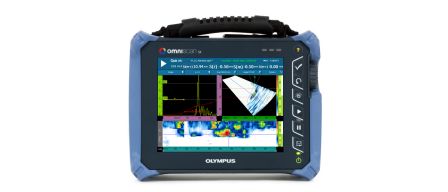
  • Manual inspection using an OmniScan™ and phased-array probe
  • Inspection setup using a −30- to +30-degree LW refracted angle sectorial scan
  • Real-time display of A-scan and S-scan data
  • Capable of storing display screen captures or full data file for offline analysis on computer-based software (TomoView™)
Equipment Required
  • OmniScan™ PA Weld package
  • 5-MHz 16-element phased-array probe
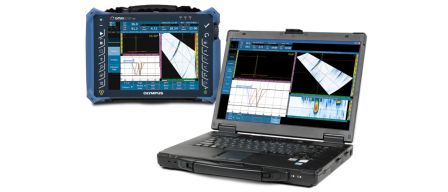
  • TomoView® software for advanced analysis
Inspection Method
A 0-degree raster scan is used to find the area that has laminations. Then the phased array probe using the −30- to +30-degree S-scan setup is manually scanned over on the areas where defects have been found to determine if there is a link between those defects.

Screen shots and reports of the defect can be immediately created for later printouts.

Products used for this application

OmniScan MX

OmniScan MX是一款使用多种技术的高级探伤仪。这款便携式模块化探伤仪具有极高的采集速率和强大的软件功能,可以进行高效地手动和自动检测。这款仪器可以使用PA和常规UT模块,以及常规EC和ECA模块。

OmniScan MX2NEW

具有触摸屏界面功能的OmniScan MX2相控阵探伤仪提高了检测效率,并具有强大的软件功能。使用这款仪器可以快速进行设置,缩短检测周期,并快速创建报告,从而保证了超水平的手动和高级AUT应用的特性。它与当前所有的相控阵模块都兼容。

TomoView软件

TomoView是一个基于PC机的软件,用于超声信号的数据采集和显示。

English | 日本語 | français | 简体中文 | Deutsch | italiano | čeština | magyar | Tiểng Việt | Español | русский | polski | português | 한국어