Thickness Measurements and Flaw Detection of Ceramics
Ceramic Parts, Coatings
New techniques in the manufacture of ceramics have led to many new high-performance and heat resistant ceramics that have found increasing use in the automotive, aerospace, and electronic industries.
Most structural and electronic ceramic components are well suited for ultrasonic thickness gaging. Fired ceramics can generally be measured over a wide thickness range and with a great degree of precision. Ultrasonic gages can be used to measure the thickness of structural ceramic products such as turbine blades, valves, and other engine components. Elastic modulus can also be calculated through measurement of longitudinal and shear wave velocities.
In addition to basic wall thickness measurements, ultrasonic gages can measure ceramic coatings on most substrates. Ultrasonics is also a technique well suited the nondestructive detection of flaws, irregularities, and bond integrity in ceramic parts and components.
Because of the wide variety of physical properties in ceramic materials, it is recommended that a sales engineer be consulted for final selection of instrumentation.
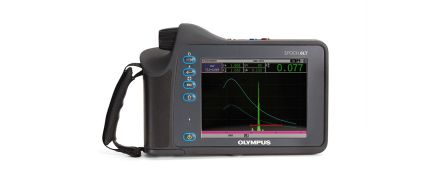
The EPOCH 6LT portable ultrasonic flaw detector is optimized for one-handed operation and delivers excellent performance in rope access and high-portability applications. Lightweight with an ergonomic design, the instrument fits securely in a user’s hand or can be strapped to the leg for rope access applications.
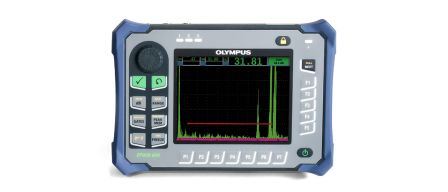
The EPOCH 650 is a conventional ultrasonic flaw detector with excellent inspection performance and usability for a wide variety of applications. This intuitive, rugged instrument is a continuation of the popular EPOCH 600 flaw detector with additional capabilities.
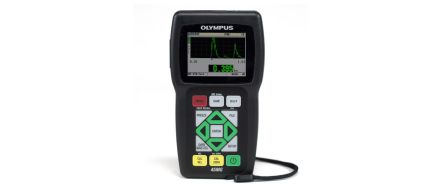
Pokročilý ultrazvukový tloušťkoměr 45MG je vybaven standardními měřicími funkcemi a softwarem. Tento unikátní nástroj pro měření tloušťky je kompatibilní s naší úplnou řadou jednoměničových a dvouměničových sond pro měření tloušťky.
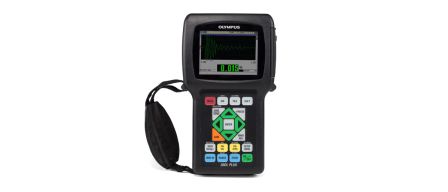
Všestranné měřidlo 38DL PLUS™ lze použít s dvouměničovými sondami pro měření zkorodovaných trubek a s jednoměničovými sondami pro velice přesná měření tloušťky tenkých nebo vícevrstvých materiálů.
Sorry, this page is not available in your country
Sorry, this page is not available in your country
Let us know what you're looking for by filling out the form below.


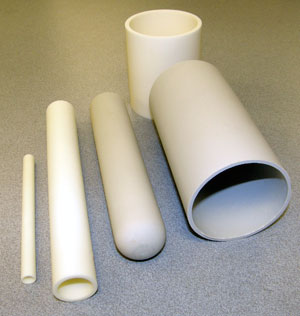 Ceramic Parts, Coatings