应用

应用注释

Braze Joint Testing

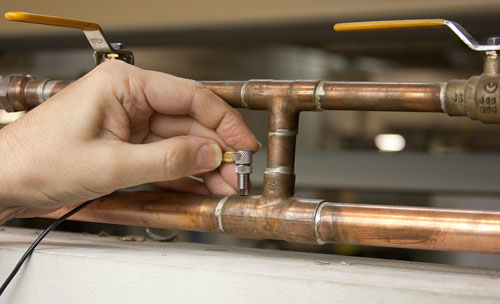
transducer testing a braze joint

Application: Testing the integrity of metallic braze joints in metal tubing and other parts.

Background: Brazing is a common process for joining sections of small diameter metal tubing and certain other small metal parts such as electrical contacts. It bonds two pieces of metal by means of a metallic filler that is melted and then flowed into the space between them by capillary attraction. The process is similar to soldering. The filler metal, which is commonly an alloy of copper, silver, tin and/or zinc with a relatively low melting point, must fill the space between the two parts being joined, wet the surfaces, and fuse them when it cools and solidifies. If the braze metal does not flow properly or does not fuse, the integrity of the joint will be affected. This problem can usually be identified with an ultrasonic flaw detector.

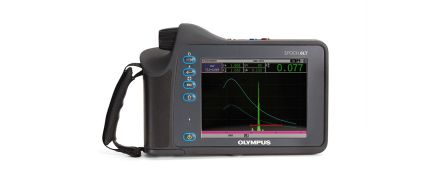
Equipment: Most braze joints can be tested with any Olympus ultrasonic flaw detector, including the EPOCH LTC, EPOCH 600, EPOCH XT, and EPOCH 1000. Given the typical geometry of braze joints, small diameter contact or delay line transducers are usually used. The transducer should be selected with respect to the geometry of the specific joint being tested, but for typical small diameter tubing the V208-RM (20 MHz) and V260 Sonopen (15 MHz) transducers are most commonly recommended.

Procedure: Braze joints are typically tested by means of a straight beam test that monitors the amplitude of the echo from the inside surface of the outer metal part. In the case of a good braze joint at the test point, the metal-to-metal bond will return a relatively small reflection, while an air gap will return a much larger one. These levels are established in each case by setting up on samples representing know brazed and un-brazed conditions.

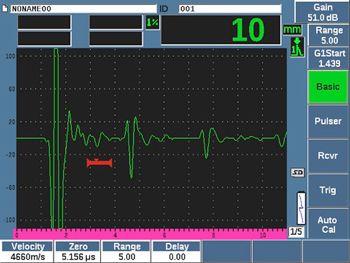
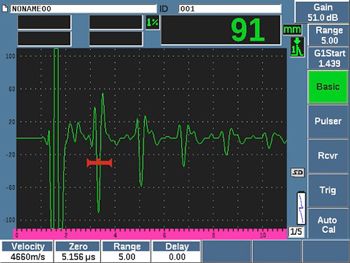
The example below represents typical echoes from a braze joint between 9.5 mm (.0375 in.) and 12.5 mm (0.5 in.) copper tubing that was tested with a V208-RM transducer and an Epoch XT flaw detector. The first waveform shows a reference echo from an un-brazed area of the outer tube, which has been marked with a gate and set to nearly full screen height. The second waveform shows the response from a properly brazed point, in which the echo in the gated region drops to a very low level. By observing the amplitude of the echo within the gate, the operator can determine the joint condition at each test point by comparing the echo amplitude to these reference levels.

A partial braze within the area of the sound beam will be represented by a mid-level echo. Note: it is important to remember that very small discontinuities such as pinholes whose size is a small fraction of the beam diameter will not be detected through this procedure.

unbrazed joint screen

Typical echo response from unbrazed point.

brazed joint screen

Typical echo response from brazed point.

Products used for this application

EPOCH 1000系列

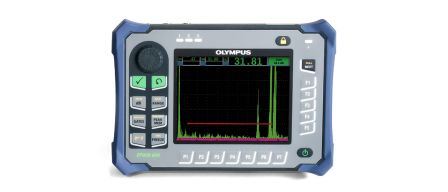
EPOCH 1000是一款高级常规超声探伤仪,可在授权的Olympus服务中心为其升级,使其具有相控阵成像功能。其主要特性包括:符合EN12668-1标准、37个数字式接收器滤波器选择、用于高速扫查的6 kHz脉冲重复频率。

EPOCH 600NEW

EPOCH 600是一款中级水平的手持式超声探伤仪。EPOCH 600仅重1.68公斤(3.72磅),机身横宽竖窄,机壳坚固耐用,可以在非常恶劣的检测环境中正常工作。EN12668-1型号仪器增加了400 V PerfectSquare可调方波脉冲发生器及用于加强信噪比的数字式滤波性能。

EPOCH LTC

EPOCH LTC是一款中级水平的手持式超声探伤仪。这款小巧的仪器为横窄竖宽结构,仅重0.96公斤(2.12磅)。这款功能齐全的仪器符合EN12668-1标准,不仅具有各种标准的功能,还可附加满足用户的具体检测需求的特殊选项。

EPOCH XT

EPOCH XT是一款高级便携式超声探伤仪。具有很多标准测量功能,其中包括可调方波脉冲发生器、可选窄带和宽带数字式滤波器、0~110 dB的增益范围、峰值记忆和峰值保持、可调PRF。

Inspection & Measurement Systems
English | 日本語 | français | 简体中文 | Deutsch | italiano | čeština | magyar | Tiểng Việt | Español | русский | polski | português | 한국어

Advanced NDT Solutions

Flaw Detectors

Integrated Inspection Systems