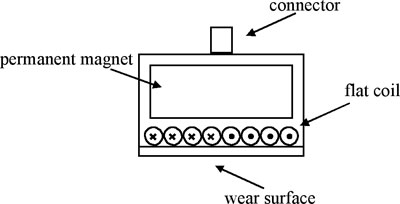
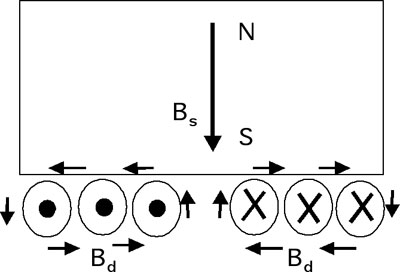
Appareils recommandés : ContexteLa température très élevée à l’intérieur des chaudières à vapeur (supérieure à 800 °C) peut engendrer la formation d’un type spécifique d’oxyde ferrique dur et cassant appelé magnétite qui se dépose sur les surfaces interne et externe des tubes en acier. La présence de cette couche sur l’extérieur des tubes peut nuire aux mesures d’épaisseur de la paroi par ultrasons prises avec des sondes à émission-réception séparées courantes, parce que sa surface qui peut être très rugueuse empêche un bon couplage et que son épaisseur s’ajoute à celle de l’acier. Toutefois, comme son nom l’indique, la magnétite est magnétique, et cette propriété permet l’utilisation de sondes magnétostrictives EMAT (sonde électromagnétique-acoustique) comme la sonde Olympus NDT E110-SB. Les sondes EMAT offrent de nombreux avantages par rapport aux sondes piézoélectrique à émission-réception séparées conventionnelles : il n’est plus nécessaire de retirer la magnétite, l’épaisseur de magnétite n’est plus ajoutée à l’épaisseur de la paroi et les mesures sont prises très rapidement et sans couplant. La principale restriction des sondes magnétostrictives EMAT est qu’elles fonctionnent seulement en présence de magnétite sur la surface extérieure du tube de la chaudière. De plus, l’épaisseur de paroi minimale mesurable et la précision de la mesure ne sont pas aussi grandes que celles obtenues avec une sonde à émission-réception séparées conventionnelle. De plus, les sondes EMAT sont relativement insensibles aux petites piqûres internes. C’est pourquoi ces sondes sont souvent utilisées pour les examens rapides initiaux de l’épaisseur de paroi, tandis que les sondes à émission-réception séparées servent à l’inspection plus en profondeur des zones problématiques. Principes de fonctionnementDeux types de sondes EMAT sont utilisés dans l’industrie du CND. Les sondes connues sous le nom de sondes EMAT Lorentz ne nécessitent pas la présence de magnétite, mais elles nécessitent une très grande puissance d’excitation. Les sondes EMAT magnétorestrictives, comme la sonde E110-SB d’Olympus, nécessitent la présence de magnétite, mais elles fonctionnent à des puissances d’excitation beaucoup plus basses typiques dans les mesureurs d’épaisseur et les appareils de recherche de défauts ultrasonores. Une sonde EMAT magnétostructive est constituée d’un fort aimant permanent et d’une bobine qui sert d’électro-aimant quand elle est activée par l’impulsion d’excitation provenant de l’appareil d’inspection, comme le montre la figure 1. L’aimant crée un champ magnétique perpendiculaire à la surface de la magnétite (Bs dans la figure ci-dessous), tandis que le champ dynamique créé par l’électro-aimant (Bd) ramène la magnétite vers l’intérieur et vers l’extérieur radialement quand la sonde est excitée, comme le montre la Figure 2. Ce mouvement génère une onde transversale à incidence normale dans la magnétite qui se propage ensuite dans l’acier. La magnétite génère donc l’impulsion sonore à la place de l’élément actif de la sonde. La fréquence de l’impulsion sonore varie à mesure que l’épaisseur de la magnétite change : elle augmente quand l’épaisseur diminue et elle diminue quand l’épaisseur augmente. Pour les accumulations de faible épaisseur, la fréquence est d’environ 5 MHz. Le processus fonctionne aussi dans le sens inverse pour générer une tension dans la bobine quand l’onde transversale revient et fait vibrer la magnétite.
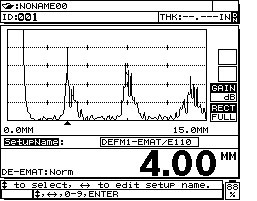
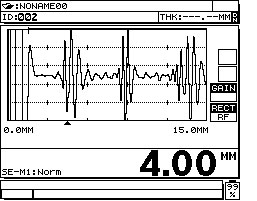
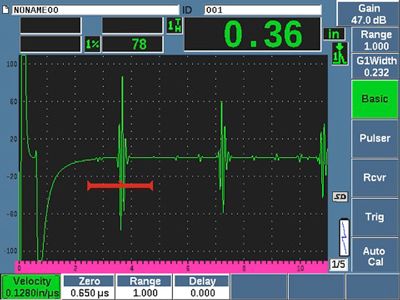
Comme la magnétite fait office d’élément de sonde, la rugosité de sa surface n’est pas un problème et elle n’est pas ajoutée à la mesure d’épaisseur. La sonde EMAT génère une onde transversale; il faut donc étalonner l’appareil à une vitesse de propagation des ondes ultrasonores transversales d’environ 3,240 m/s dans l’acier carbone typique. La précision typique de la mesure avec la sonde E110-SB EMAT est de ± 0,25 mm, avec une épaisseur minimale mesurable d’au moins 2,0 mm selon les propriétés du matériau. Procédures de configuration et de mesureLa qualité des échos ultrasons dans les applications avec sonde EMAT dépend en partie de l’uniformité de la couche de magnétite, qui peut varier d’un point à l’autre sur le tube. S’il est impossible d’obtenir des échos utilisables à un point donné, essayez de prendre la mesure à un autre point à proximité. Aussi, la sonde E110-SB intègre un entrefer réglable qui fait varier la distance entre la sonde et la surface du tube de chaudière. Ce réglage permet souvent d’optimiser la qualité de l’écho.
|


Solutions industrielles
Documentation
Notes d’application
Retour aux ressources
Mesures d’épaisseur de la paroi de tubes de chaudières avec des sondes EMAT


Produits utilisés pour cette application
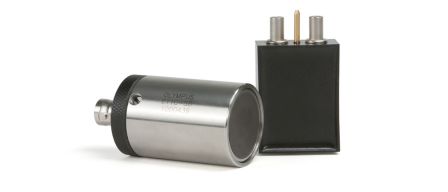
Les sondes à ultrasons EMAT sont des sondes monoéléments qui utilisent un effet magnétostrictif pour émettre et recevoir des ondes ultrasonores.
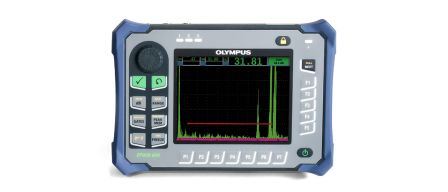
L’EPOCH 650 est un appareil de recherche de défauts par ultrasons conventionnels très performant adapté à un grand nombre d’applications. Cet appareil intuitif et robuste remplace le populaire appareil de recherche de défauts EPOCH 600. Il est aussi doté de fonctionnalités supplémentaires.
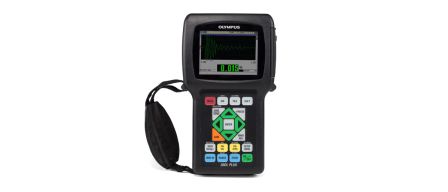
Polyvalent, le mesureur d’épaisseur 38DL PLUS peut être combiné à des sondes à émission-réception séparées pour la mesure de l’épaisseur de tuyaux corrodés, ou à une sonde monoélément pour la mesure très précise de l’épaisseur de matériaux minces ou multicouches.
Sorry, this page is not available in your country
Let us know what you're looking for by filling out the form below.