La présente note d’application contient des renseignements faciles à consulter sur la sélection de sondes et de couplants destinés à l’inspection à température élevée, ainsi que d’importantes considérations sur leur utilisation. Elle passe en revue l’inspection par ultrasons conventionnels à des températures s’élevant jusqu’à environ 500 °C. Pour les applications de recherche impliquant des températures encore plus élevées, on utilise des techniques par ondes guidées très spécialisées. Ces techniques n’entrent pas dans le cadre de la présente note d’application. À des températures très élevées, même les couplants spécialisés pour ces applications doivent être utilisés rapidement, puisqu’ils ont tendance à sécher ou à se solidifier et à ce moment ils ne transmettent plus l’énergie ultrasonore. Vous devez retirer tout résidu de couplant séché de la surface à inspecter et de la sonde avant d’effectuer la mesure suivante. Il est aussi à noter que le couplage des ondes transversales à incidence normale est généralement impossible à des températures élevées, car les couplants commerciaux spécifiques à ces applications se liquéfient et perdent ainsi la très haute viscosité nécessaire à la transmission de ces ondes. Nous offrons deux types de couplant pour l’inspection à température élevée : Couplant H — Couplant pour l’inspection à des températures élevées pouvant être utilisé dans les environnements ouverts à une température maximale de 510 °C. Il faut souligner que les couplants pour l’inspection à des températures moyennes ou élevées ne doivent pas être utilisés dans des zones non ventilées, car il existe un petit risque d’auto-inflammation des vapeurs. Contactez Olympus pour en savoir plus. Pour accéder à la liste complète de couplants offerts par Olympus, ainsi que des notes connexes, veuillez consulter la note application sur les couplants pour l’inspection par ultrasons. Temps d’utilisation : Toutes les sondes destinées à l’inspection à température élevée sont conçues pour un certain temps d’utilisation. Même si la ligne à retard isole l’intérieur de la sonde, un contact prolongé avec des surfaces très chaudes causera une accumulation significative de chaleur pouvant entraîner des dommages irréversibles à la sonde si la température intérieure devient trop élevée. Pour la plupart des sondes à émission-réception séparées et à ligne à retard, le temps d’utilisation recommandé lors de l’inspection de surfaces d’une température variant entre 90 °C et 425 °C ne doit pas dépasser dix secondes de contact avec la surface chaude (cinq secondes étant recommandées), suivi d’un temps de refroidissement d’une minute. Soulignons qu’il ne s’agit ici que de lignes directrices. Le rapport entre le temps de contact et la durée de refroidissement est encore plus critique dans la limite supérieure de l’étendue des températures de la sonde. En règle générale, si le boîtier de la sonde devient trop chaud pour être tenu avec la main, cela veut dire que la température interne atteint une température qui risque de l’endommager. Vous devez alors laisser refroidir la sonde avant de continuer l’inspection. Certains utilisateurs utilisent un système de refroidissement à l’eau pour accélérer le processus. Toutefois, Olympus n’a pas de directives officielles concernant ce type de refroidissement et c’est à l’utilisateur d’évaluer si cela est approprié. Les appareils de recherche de défauts Epoch d’Olympus et tous les mesureurs d’épaisseur sont dotés de fonctions de gel qui peuvent servir à figer le A-scan et la lecture affichés. Cette fonction est très utile pour les mesures à température élevée, car elle permet à l’opérateur de capter une lecture et d’enlever rapidement la sonde de la surface chaude. Avec les mesureurs, il faut utiliser le mode de mise à jour rapide de l’écran pour minimiser le temps de contact. Les effets de la température et de l’atténuation dans les polymères dépendent en grande partie des matériaux. Toutefois, ils seront généralement plusieurs fois supérieurs à ceux de l’acier. En particulier, les longues lignes à retard chaudes pour l’inspection à température élevée peuvent représenter une source importante de l’atténuation totale d’une inspection. |


Solutions industrielles
Documentation
Notes d’application
Retour aux ressources
Inspection par ultrasons à température élevée
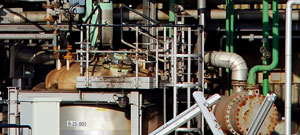 Contexte : La plupart du temps, la recherche de défauts par ultrasons et les mesures d’épaisseur sont effectuées à des températures ambiantes normales. Toutefois, le matériau à inspecter est parfois très chaud. Ces situations se présentent le plus souvent dans l’industrie de processus où il est impératif d’inspecter des tuyaux et des réservoirs métalliques chauds sans interrompre leur utilisation pour les laisser refroidir. L’industrie de la fabrication doit aussi gérer ces contraintes. En effet, on y inspecte des matériaux chauds, comme des tuyaux en plastique extrudé ou du plastique thermoformé immédiatement après la fabrication, ou des lingots de métal ou de fonte avant qu’ils ne soient complètement refroidis. Les sondes à ultrasons conventionnels supportent des températures aussi élevées que 50 °C. À plus haute température encore, elles finissent par subir des dommages permanents causés par un décollement interne par expansion thermique. Si l’inspection vise des matériaux d’une température supérieure à 50 °C, il faut utiliser des sondes et des techniques d’inspection spécifiques.
Produits utilisés pour cette application
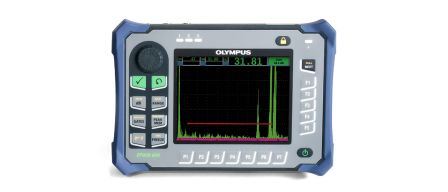
L’EPOCH 650 est un appareil de recherche de défauts par ultrasons conventionnels très performant adapté à un grand nombre d’applications. Cet appareil intuitif et robuste remplace le populaire appareil de recherche de défauts EPOCH 600. Il est aussi doté de fonctionnalités supplémentaires.
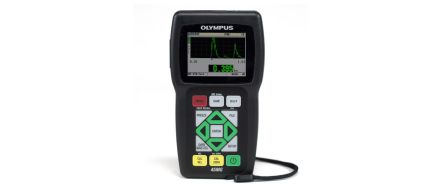
Le 45MG est un mesureur d’épaisseur à ultrasons de pointe équipé de série de multiples fonctions de mesure et d’options logicielles. Cet outil de mesure d’épaisseur unique est compatible avec notre gamme complète de sondes de mesure d’épaisseur monoéléments et à émission-réception séparées.
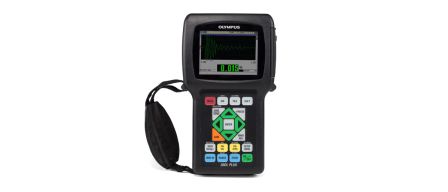
Polyvalent, le mesureur d’épaisseur 38DL PLUS peut être combiné à des sondes à émission-réception séparées pour la mesure de l’épaisseur de tuyaux corrodés, ou à une sonde monoélément pour la mesure très précise de l’épaisseur de matériaux minces ou multicouches.
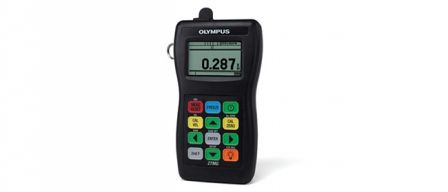
Le 27MG est un mesureur d’épaisseur à ultrasons de base conçu pour prendre des mesures d’épaisseur précises à partir d’un seul côté des tuyaux ou des pièces métalliques corrodés ou érodés de l’intérieur. Il est léger et robuste, et son design ergonomique permet une utilisation sans effort à une seule main.
Sorry, this page is not available in your country
Let us know what you're looking for by filling out the form below.